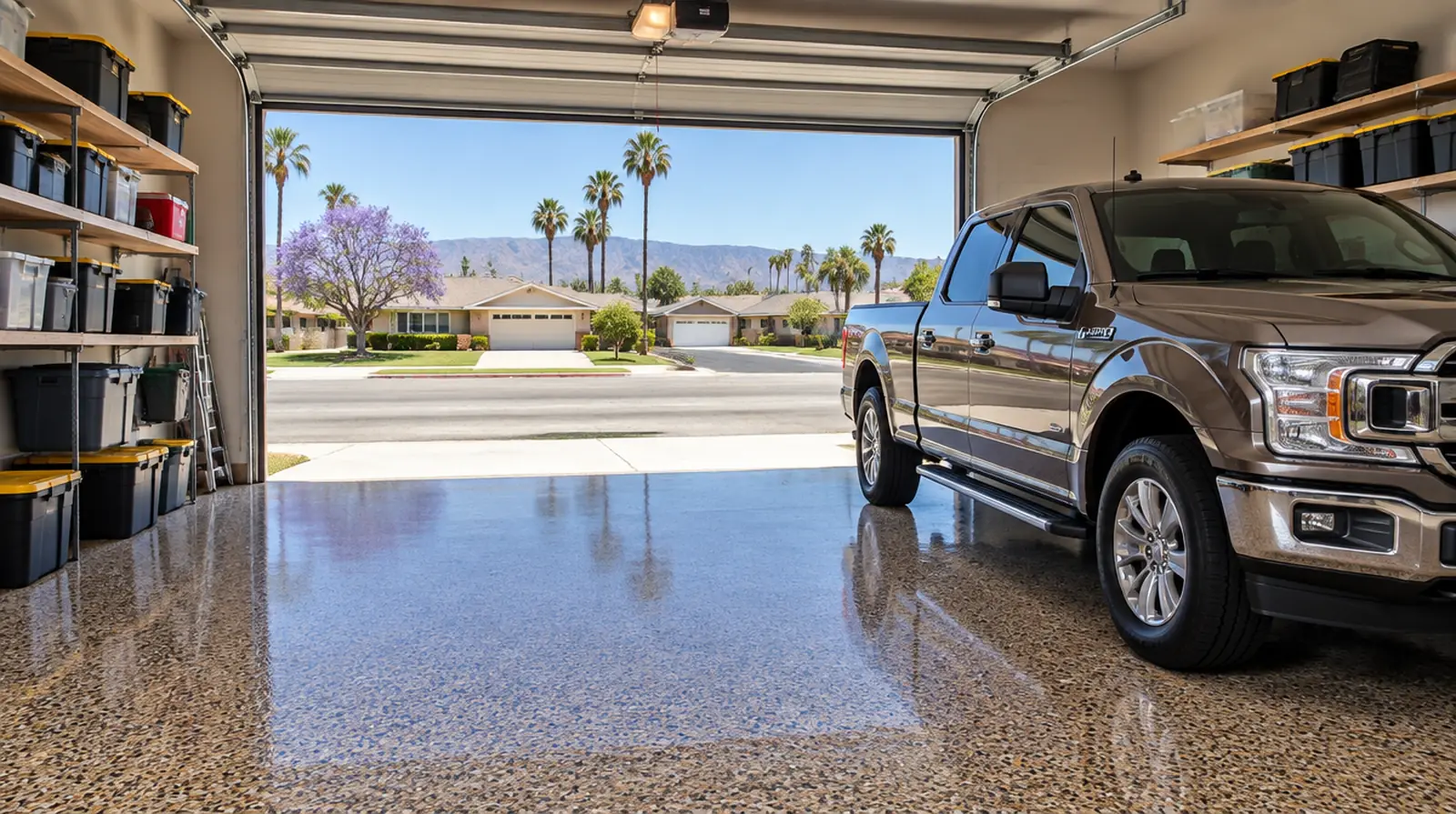
What a flake floor is
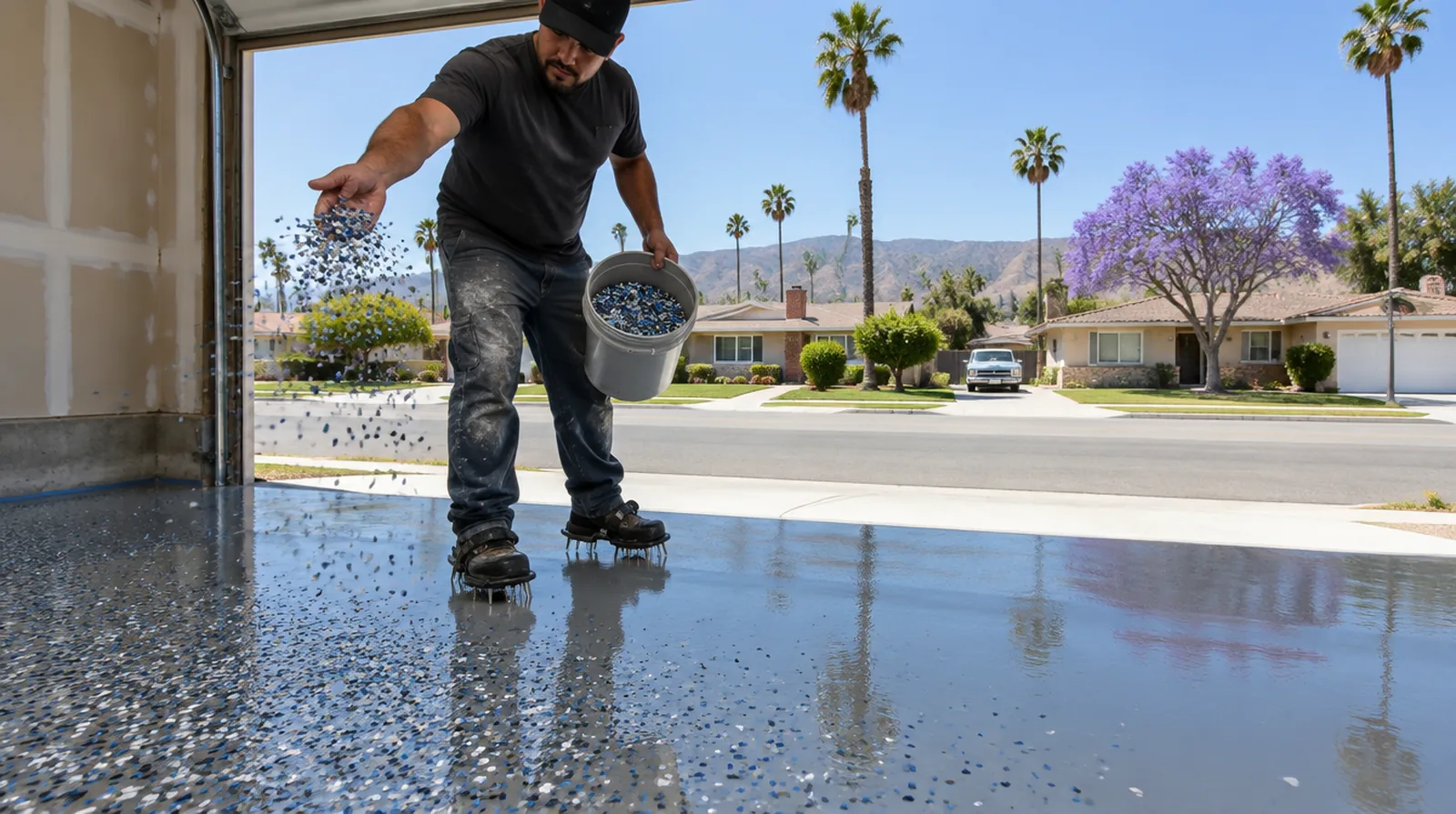
A flake floor starts with a pigmented epoxy or polyaspartic base coat. While that coat is still wet, we broadcast colored vinyl chips by hand until the whole surface is covered. After it cures, we scrape away loose chips, smooth the surface and seal everything under clear topcoats. The finished floor has a speckled, stone-like look and a light texture you can feel underfoot.
That texture and pattern are what make flake so practical. Dust, tire marks, small scratches and the fine sand that blows in on windy days all disappear into the chips. The surface grips better than a smooth solid color, which matters when someone washes a car inside or tracks in water from the sprinklers. For families who use the garage every day, flake is usually the best value.
How we build it
Prep is the same as for any good coating. We diamond grind the slab with vacuum dust control, then repair cracks, chips and pitted areas. Older floors in town often need extra work along the door where water and tires have worn the edge. After vacuuming, we roll out the base coat and broadcast the flakes in sections, adding chips until no wet coating shows. That full broadcast creates a thicker, stronger floor than a light decorative sprinkle.
Once the base cures, we scrape and sand off loose flakes, vacuum again and apply one or two clear topcoats. The topcoat locks in the chips, sets the sheen and adds UV and chemical resistance. We use aliphatic topcoats so the floor does not yellow where the afternoon sun hits it through the open door.
Picking a blend
There are dozens of chip blends. Grays and charcoals look clean and modern. Tans, browns and creams feel warm and suit stucco homes with earthy trim. Blends with flecks of red, blue or white add personality. Lighter blends make a small garage feel bigger and keep it a little cooler in summer. We bring sample boards to the estimate so you can see them in your own light, since a blend can look very different under fluorescent tubes than in sunshine.
Chip size changes the look too. Standard quarter-inch chips give the classic speckled garage floor. Smaller chips produce a finer, more granite-like pattern. We can also adjust texture in the topcoat for more or less grip.
Good for busy households
Many local homes have several drivers, kids on bikes and a garage that doubles as storage for coolers, party chairs and tools. Flake handles that traffic well. It resists oil and gas, wipes clean after a spill and hides the everyday dirt that comes in on shoes. It also works great in laundry rooms, side yards with covered patios, workshops and converted rooms that still see heavy use.
Epoxy or polyaspartic base
We can build flake floors with an epoxy base and polyaspartic topcoat or entirely with polyaspartic. Epoxy gives long working time and an excellent bond, and it costs a little less. Polyaspartic cures quickly, which often allows a one-day install, and it handles heat and UV especially well. We explain both options during the estimate and recommend the one that suits your slab and schedule.
Old, stained slabs
Flake is a great choice for older slabs with stains or patched areas, because the full chip coverage hides color differences in the concrete underneath. We still grind and repair properly, since appearance is only part of the job. A good bond is what keeps the floor from peeling, and we never skip that step to save time.
Where flake fits best
Garages, workshops, laundry rooms, storage units, home gyms, kennels and many commercial back rooms. For showroom-style rooms where you want a glassy uniform finish, metallic epoxy or polished concrete may suit better. For outdoor patios in full sun, we usually recommend sealing or a dedicated exterior coating.
Easy care
Sweep or dust mop to remove grit. Mop with warm water and a mild cleaner, using a soft brush in textured areas. Avoid harsh acids and strong solvents. Put mats under dripping cars and pads under heavy toolboxes. If the topcoat dulls after many years, it can be lightly sanded and recoated without redoing the floor.
Questions
Will the flakes come loose?
No. They are locked into the base and sealed under clear topcoats.
Is it slippery when wet?
It has natural texture, and we can add grit for more grip.
How soon can I park?
Usually one to three days, depending on the base material.
Want to see blends in person? Book a free estimate and we will bring samples.
Choosing a chip size
Flake chips come in different sizes. Larger chips create a bold, speckled look that hides dirt very well. Smaller chips look finer and more like stone. Most garages here get a quarter-inch blend, which balances looks and practicality. We bring samples of each size so you can compare them on your own floor before deciding.
Get your flake floor estimate
Call (562) 568-8277 for a free estimate.